Cart 0


Clutch & Flywheel Upgrades for High-Torque Turbo Porsches
If you’re pushing torque past factory numbers, a turbo Porsche clutch upgrade isn’t optional. It’s the next thing on your list, whether you’ve planned for it or not. Everyone obsesses over the engine and turbos in a power build. But the clutch and flywheel are what get that power down to the wheels. And they don’t fail loudly. They fail quietly, right up until the moment they don’t.
Factory clutch packs are built around factory torque numbers, full stop. Add a turbo upgrade, a bigger fuel system, or an aggressive tune, and the stock clutch becomes the weakest link almost overnight. Slipping, chatter, a burning smell on hard pulls — these are the warning signs. They show up fast once torque outpaces what the clutch was built to hold.
At ES Motors, we don’t treat the clutch as an afterthought. Every high-torque build gets a clutch and flywheel assessment alongside the engine work. Matching the two keeps everything downstream reliable.
Why Factory Clutches Hit a Wall
Porsche builds the factory clutch with some margin for hard driving. That margin disappears fast once boost and fuelling go up. A clutch rated comfortably for 450 lb-ft doesn’t have much left once a build climbs past 600.
Heat causes most of the problem. Every bit of slip under load generates heat the factory friction material was never built to absorb. Do that enough times and the surface glazes over. Grip drops, slip increases, and heat builds even more. It’s a feedback loop that ends one way.
A factory clutch on a 900 HP car rarely gives a warning. It usually just lets go, often during a launch or a hard pull when you need it most.
Single, Twin, or Triple Plate: Which One Actually Fits
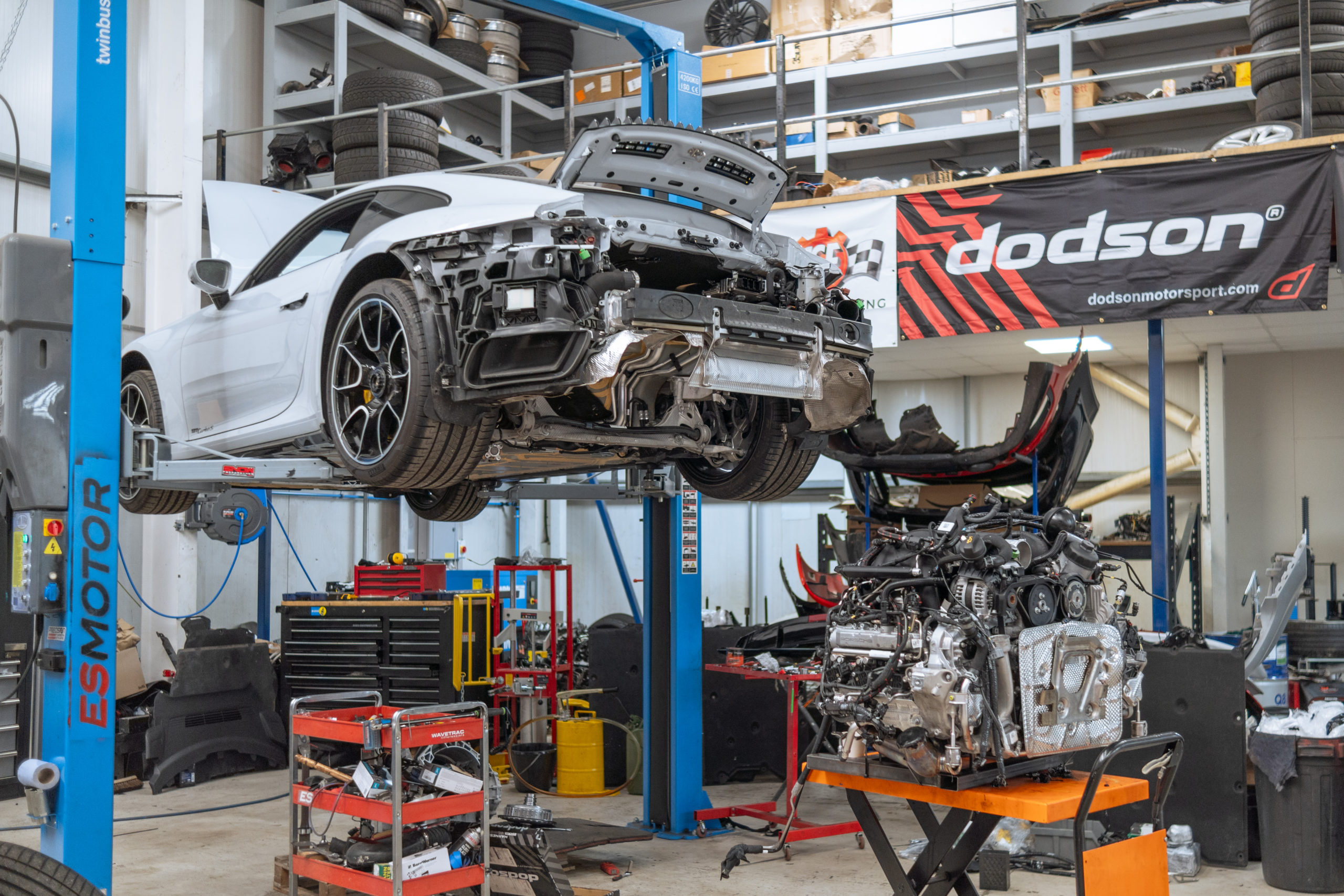
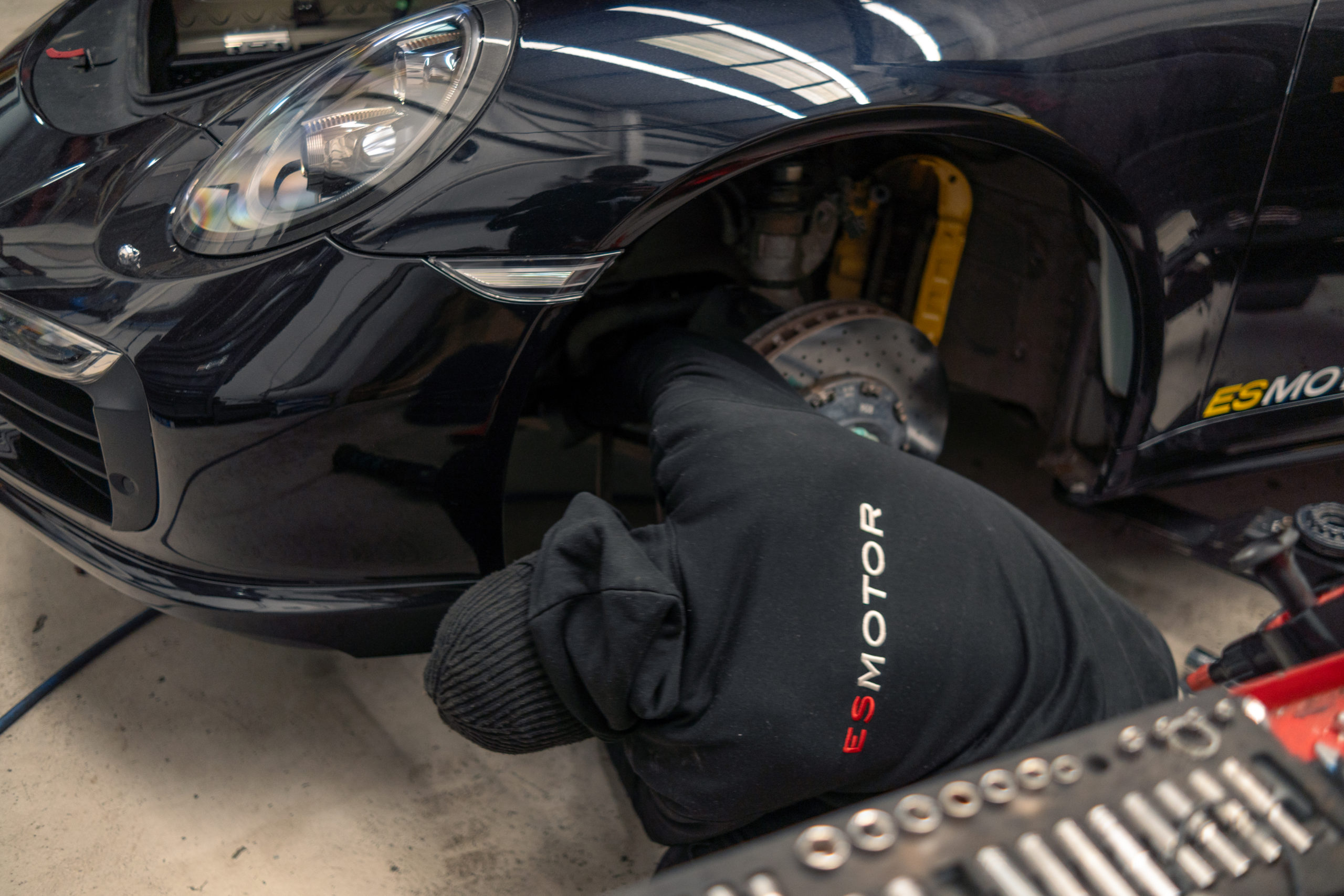
A turbo Porsche clutch upgrade usually comes down to picking between single, twin, or triple-plate setups. Each one trades something for something else: torque capacity, pedal feel, and how livable it is day to day.
A good single-plate setup with an upgraded pressure plate handles builds up to roughly 700 lb-ft. It won’t make the car miserable to drive. Pedal feel stays close to stock, and you can still daily it without complaints.
Twin and triple-plate clutches spread the clamping load across multiple smaller discs. That gets you 1000+ lb-ft of capacity. But the pedal gets noticeably firmer, and engagement loses some forgiveness. That’s fine for a dedicated track car, less fun in traffic.
Flywheel Choice: Lighter Isn’t Always Better
The flywheel works hand in hand with the clutch. It changes how the engine feels under throttle. Go lighter and the engine revs up and down quicker. That sharpens response and helps the turbos spool faster between shifts.
The catch is low-speed manners. A lightweight flywheel can feel grabby or less forgiving at idle and in stop-and-go traffic. There’s simply less stored momentum smoothing things out.
We pick flywheel weight based on how the car actually gets driven, not just the power number on paper. A track car can run an aggressive lightweight setup. A street car usually keeps more mass for the sake of livability.
PDK Clutch Packs Are a Different Animal
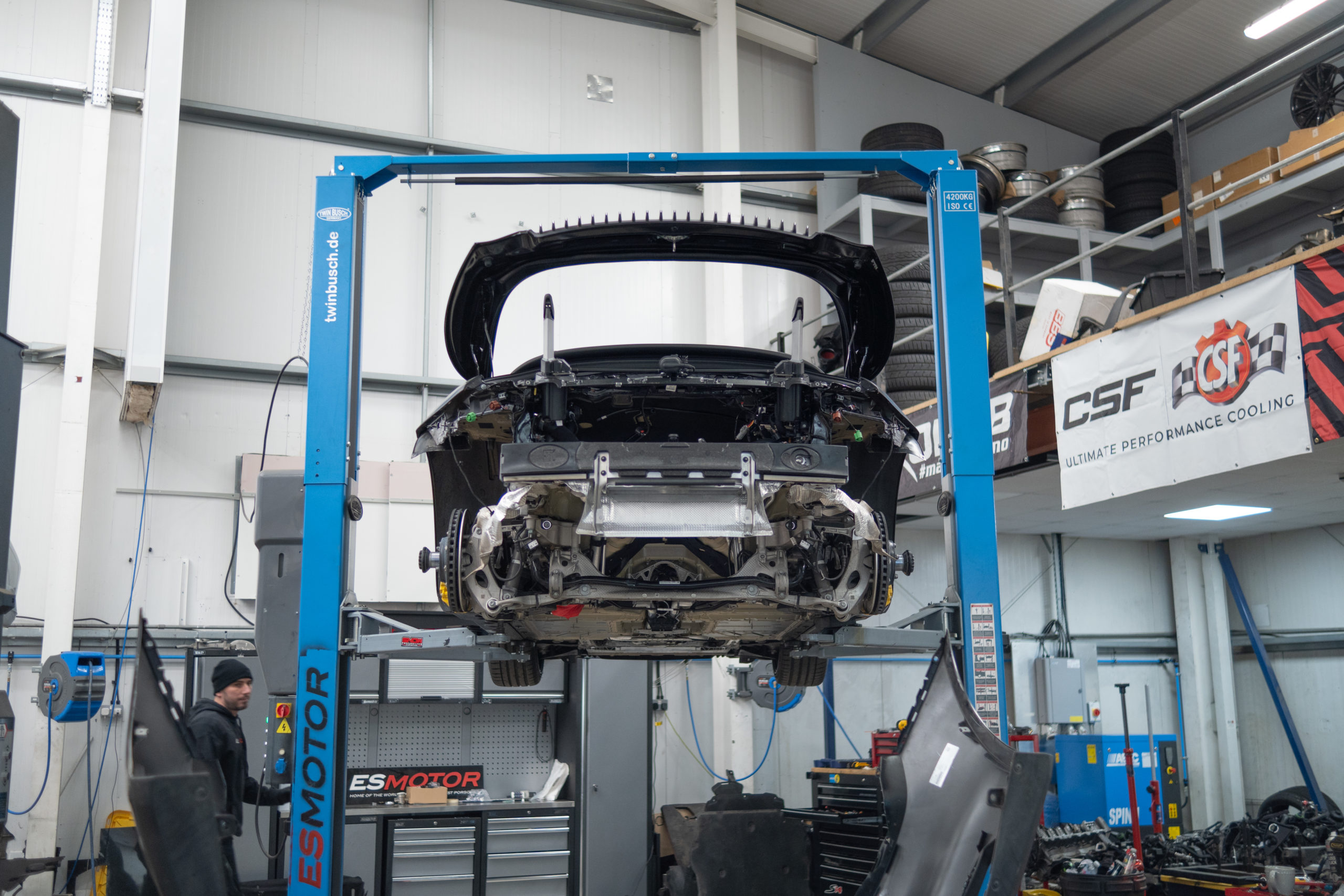
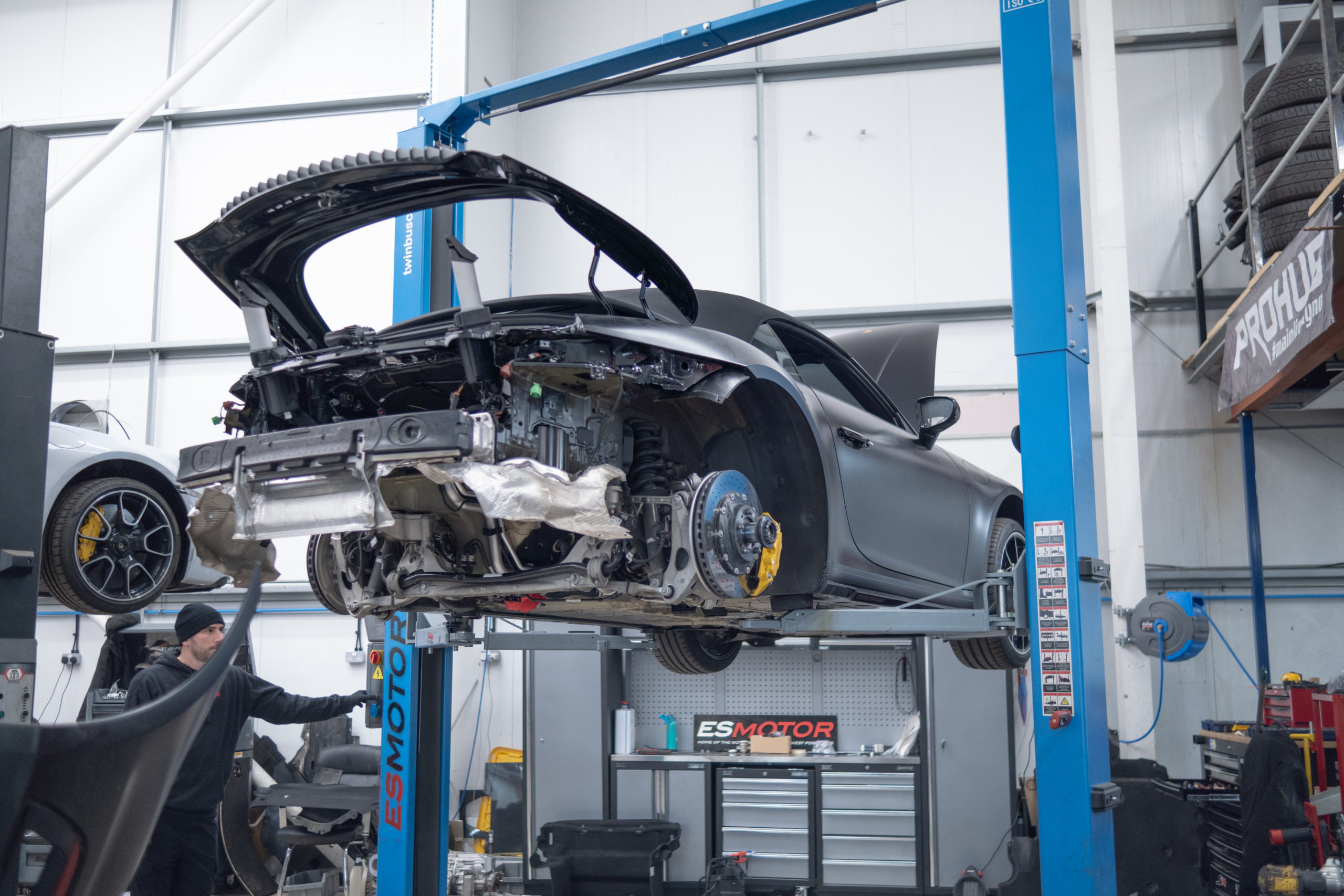
PDK cars don’t use a single dry clutch disc. They run wet, multi-plate clutch packs, and that changes the whole conversation. These packs respond well to upgrades, but the approach looks nothing like a manual build.
Aftermarket PDK clutch packs use better friction material and reinforced plates. They handle a lot more torque than the factory unit. Pair that with TCU software tuning, and you get control over shift firmness and engagement pressure.
Skip the clutch pack upgrade on a high-torque PDK, and you’re asking for slip during launches and hard upshifts. We always pair PDK power upgrades with a matching clutch pack spec. Shifts stay firm instead of getting mushy under load.
It All Has to Work Together
A clutch upgrade doesn’t exist on its own. It has to match the flywheel, the gearbox internals, and the actual torque curve the engine produces. Mismatch any of those, and you create a new problem instead of fixing the old one.
We look at the full torque delivery of a build before specifying a clutch and flywheel package. A car with a sharp torque spike needs a different clamping approach than one with a smooth, linear curve.
This is where a lot of builds go sideways. Some overbuild the clutch until it kills drivability. Others underbuild it, and it slips the moment real-world conditions hit.
Getting It Right with ES Motors
Clutch and flywheel selection comes down to matching real components to real torque numbers, not guessing off a horsepower figure. We spec every package around the actual torque curve of the finished build, not an estimate.
Every clutch upgrade gets dyno-tested to confirm it holds power cleanly under real load. That single step eliminates most of the guesswork that leads to early failure.
If you’re planning a turbo Porsche clutch upgrade and want something built around your actual power target, contact ES Motors and talk to our drivetrain specialists.