Cart 0


ECU Tuning & Engine Management for High-Power Turbo Porsches
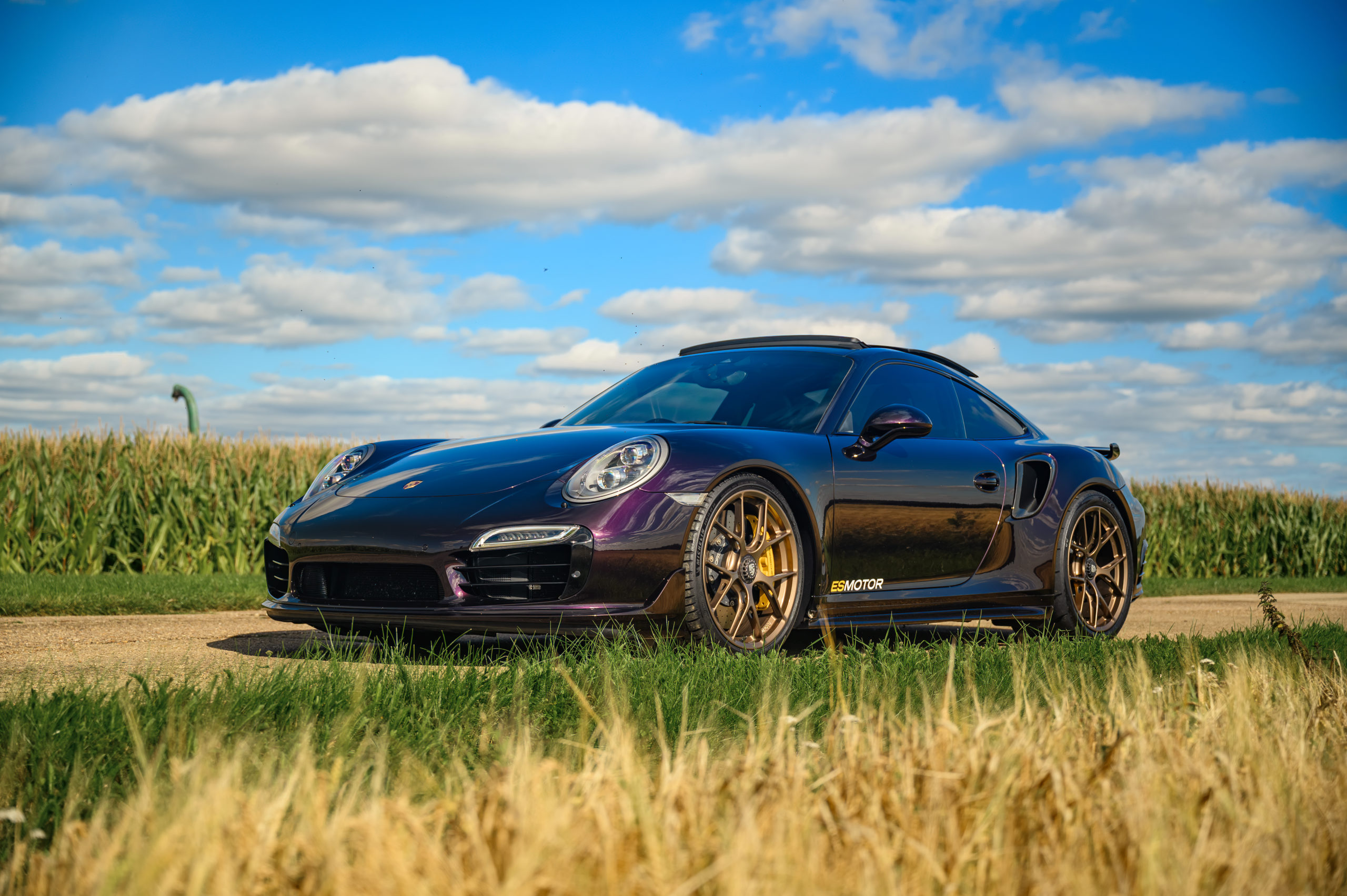
Porsche ECU tuning is honestly where most builds either prove themselves or expose their weaknesses. You can spec the right turbos, sort the fuel system, and build a solid bottom end. However, if the engine management software doesn’t match the hardware, none of it performs correctly. The ECU is the brain of the whole thing. It controls boost pressure, fuelling, ignition timing, and every response the engine makes.
Porsche writes stock ECU maps around factory hardware. They cover variable fuel quality, emissions standards, and everyday driving conditions. That works fine for a production car. The moment you change hardware though, that stock map becomes a liability. At serious power levels, a mismatched map isn’t just a performance problem — it becomes a reliability one fast.
At ES Motors, we’ve never treated engine management as a last-minute job. Every build gets a tune written around that specific car, with that exact combination of parts, on the day it runs on our dyno.
What the ECU Actually Controls
Most people assume ECU tuning is just turning up boost. In reality, it’s far more involved. The ECU handles fuel delivery, ignition timing, cam timing, boost targets, wastegate duty cycle, rev limits, and throttle mapping. All of that runs simultaneously, thousands of times every second.
Change one variable and the rest need to follow. Nothing in an engine map works in isolation. Raise boost without touching fuelling, for example, and the engine starts running lean. Add more fuel without adjusting timing and you lose efficiency. Every parameter feeds into the next, so getting them right together is what separates a good tune from a damaging one.
On a high-power turbo Porsche, the margin for error shrinks considerably. The engine works harder, temperatures climb higher, and a wrong map hits faster and harder. This is exactly why Porsche ECU tuning on a serious build demands a proper dyno session with someone who genuinely knows the platform.
Why Off-the-Shelf Tunes Fall Short
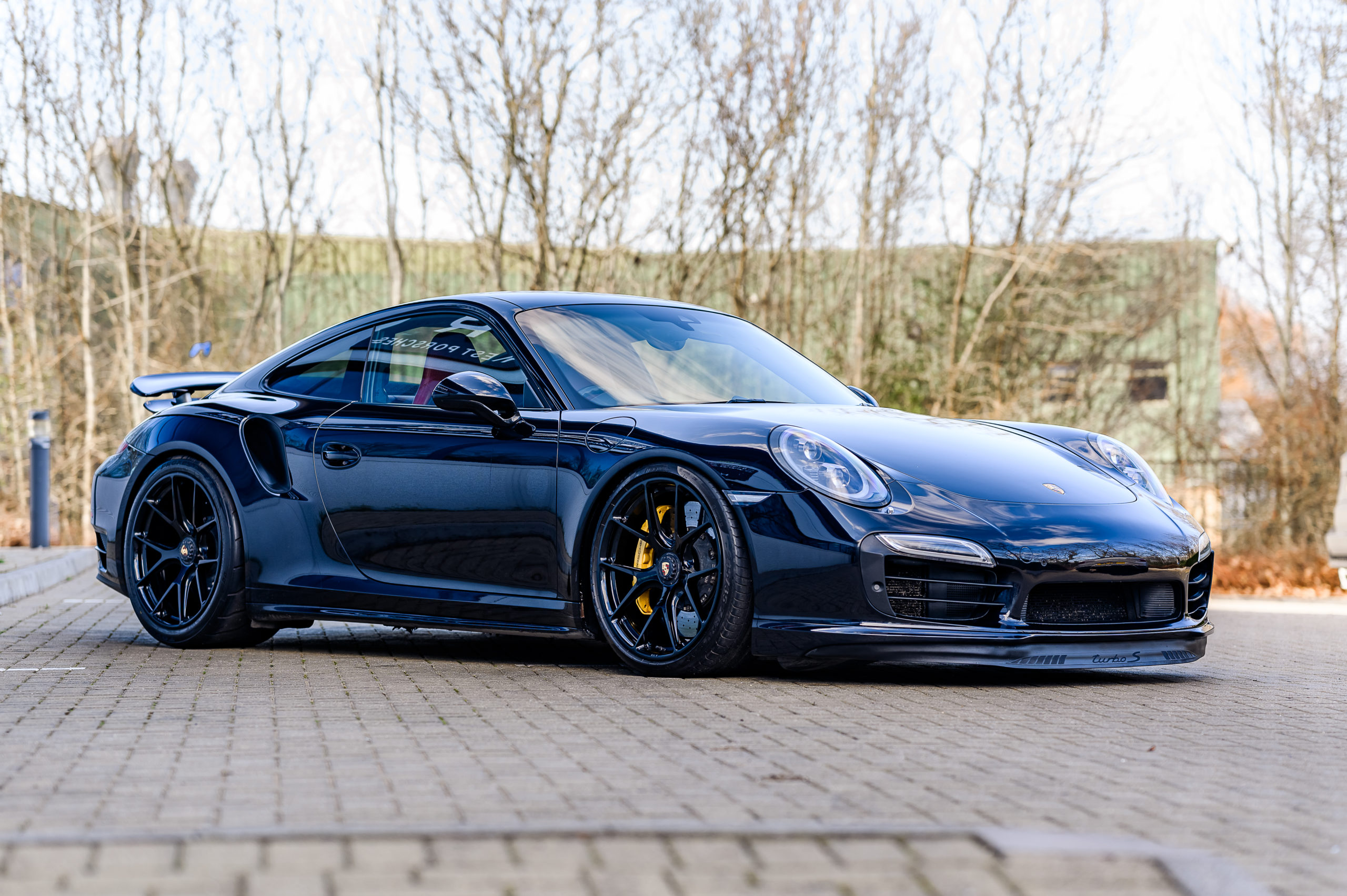
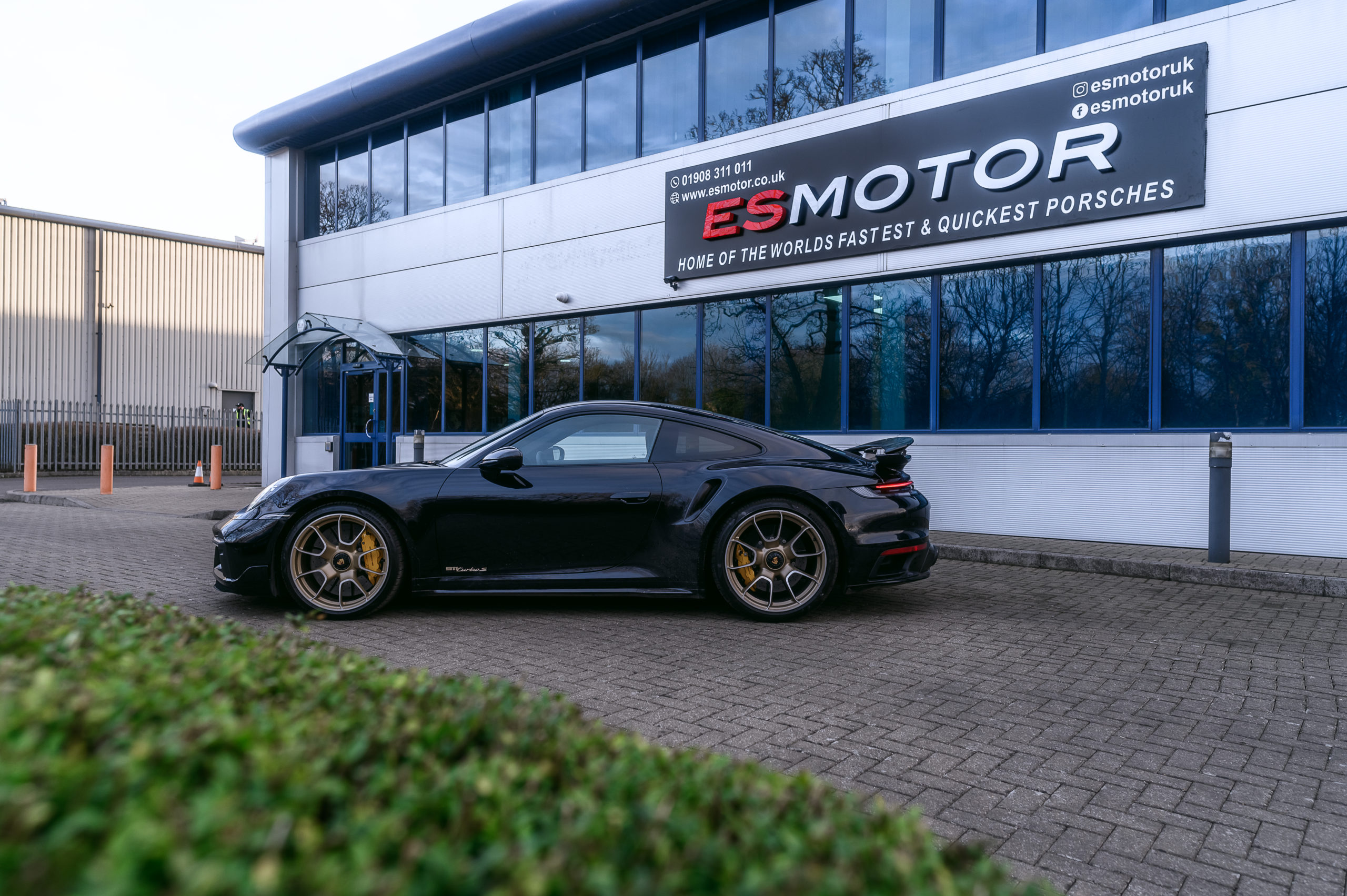
Off-the-shelf tunes target an assumed parts combination. They only work well on a car that closely matches that assumption. The problem is that almost no two builds are truly identical. Different turbos, injectors, fuel types, and exhaust setups all push the tune requirement away from what an OTS map expects.
Running an OTS tune on the wrong build is a real gamble. The car might run fine. Alternatively, it might run rich and foul the plugs, or run lean at high RPM and damage pistons. By the time a problem shows up, the damage is usually already done.
A proper custom tune removes that risk completely. Our tuners write it around the exact parts on the car, verify every parameter on the dyno, and keep refining until it’s correct for that engine at that power level.
Boost Control & Fuelling on High-Power Builds
On a stock Porsche, the ECU manages boost through the factory wastegate system. It hits a target and holds it within a tight range. However, on a modified car with larger turbos and higher boost targets, that system needs a full recalibration from scratch.
Boost control on a high-power build means setting target levels across the full RPM range. It also means managing pressure spikes during fast spool-up and keeping the engine safe from overboost. Get this wrong and spikes cause real damage quickly. Get it right and power delivery feels smooth and consistent every time.
Fuelling matters just as much. On E85 or methanol builds, injector duty cycle and fuel pressure targets shift significantly compared to pump petrol. As a result, the tune must account for the fuel’s stoichiometric ratio, its energy density, and the cooling effect it produces inside the cylinder.
The Dyno Session: Where the Tune Actually Gets Built
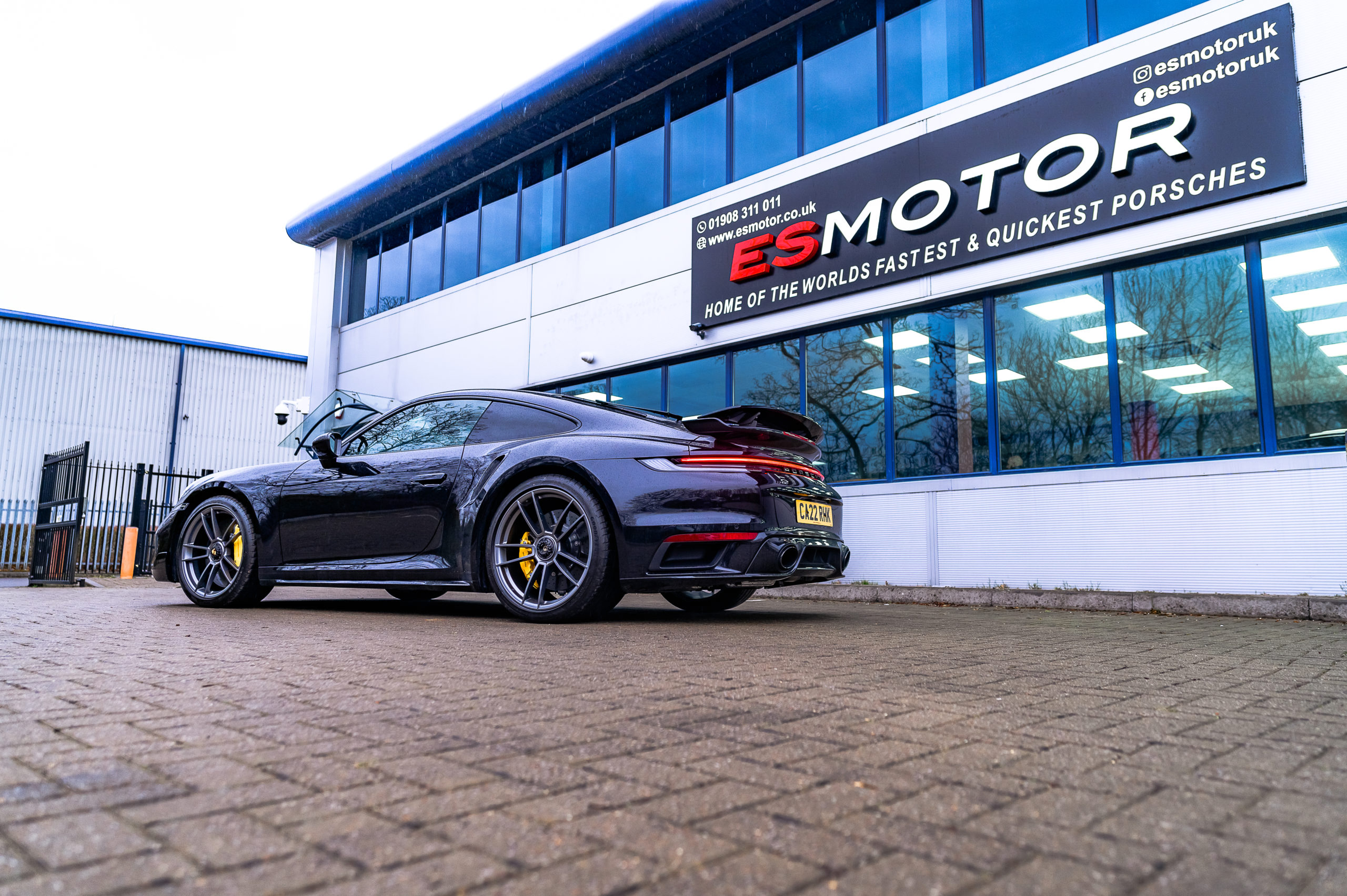
A proper Porsche ECU tuning session always takes place on a dyno, not a public road. The dyno lets the tuner hold the car at specific load points and watch every sensor in real time. The tuner makes map changes while the engine runs under real stress. A road drive simply can’t replicate that safely or accurately.
A typical session kicks off with a baseline run. From there, the tuner works through fuelling first, then timing, then boost. Each change needs its own verification run, because one adjustment often moves several other parameters. A full custom tune on a serious build regularly takes a full day, sometimes more.
The result is a map that reflects how that specific car actually behaves. That’s the real difference between a tune that looks good on a screen and one that holds up under hard use in the real world.
Ignition Timing & Knock Protection
Ignition timing is one of the biggest levers in any ECU tune — and one of the most dangerous to get wrong. Push timing too far and the engine knocks. On a boosted engine, knock damages pistons, rings, and bearings fast. It rarely gives much warning before it does.
A properly built tune sets timing as far advanced as the engine can safely handle on its fuel. Additionally, it programmes knock detection and retard strategies that pull timing back the instant sensors pick up a problem. This protects the engine without giving up power unnecessarily across the rest of the map.
On builds running E85 or methanol, the tuner can often run timing more aggressively, because both fuels resist detonation better than petrol. This creates more headroom to work with. Making the most of that headroom is a significant part of what separates a great custom tune from an average one.
ECU Tuning Done Right at ES Motors
Every car that leaves ES Motors gets a full custom tune. Not a base map with a handful of numbers adjusted. Our tuners write each map from scratch, build it around the exact hardware on that car, verify everything on the dyno, and keep refining until the result is genuinely right.
We’ve always treated the tune as part of the build itself, not something we farm out at the end. Our tuners built the engine, picked the turbos, and sorted the fuel system. Because of that, they already know exactly how that car should perform. That continuity between build and tune shows up clearly in the finished result.
Related at ESMotor: see our Porsche 992 Turbo S tuning packages and dyno rental.
If you’re planning a serious Porsche build and want Porsche ECU tuning built around your actual hardware, contact ES Motors and have a conversation with our tuning team today.