
Cart 0


Water Cooling Upgrades for High-Power Turbo Porsches: Radiators, Pumps & Coolant Routing
Porsche water cooling upgrades are an essential part of any serious high-power build. The cooling system is what keeps engine temperatures in a safe range under sustained load, and on a modified car generating significantly more heat than a stock engine, the factory cooling system quickly reaches its limits. An engine that runs too hot pulls timing, loses power, and in serious cases suffers head gasket failure or worse.
The factory water cooling system on a Porsche 911 Turbo is well designed for stock use. It handles the demands of spirited road driving without issue. However, once you start adding significant boost, increasing cylinder pressures, and pushing the engine harder for longer, the factory radiator, water pump, and coolant routing start struggling to keep up with the heat the engine produces.
At ES Motors, we treat the water cooling system as a critical part of every high-power build. Getting it right protects the engine, keeps the tune working correctly, and ensures the car performs consistently whether it’s on a track day or a long motorway run.
Why the Factory Cooling System Has Limits
Porsche designs the factory cooling system around the heat output of a stock engine at stock power levels. It works with an appropriate safety margin for normal and even spirited use. The problem is that a modified engine generating 800, 1000, or 1500 HP produces considerably more heat than the factory system accounts for. That extra heat has to go somewhere, and if the cooling system can’t shed it fast enough, coolant temperature climbs.
Rising coolant temperature triggers the ECU to pull ignition timing as a protective measure. Pulled timing means less power and less consistency. On a track where the car runs hard lap after lap, coolant temperature that starts within a safe range can climb progressively until it forces the ECU into a protection mode that ruins the session and the lap time.
The factory water pump on most Porsche 911 platforms is also mechanically driven by the engine. This means pump flow rate ties directly to engine RPM. At low RPM the pump moves less coolant, which is fine on a stock car but can become a limitation on a heavily modified engine that generates significant heat even at lower RPM under high boost.
Upgraded Radiators: More Core, More Cooling
The radiator is the primary heat exchanger in the water cooling system. It transfers heat from the coolant to the air passing through it. A larger radiator with a denser core transfers more heat per unit of time, which keeps coolant temperature lower under sustained load. On a high-power build, upgrading to a larger core radiator is one of the most effective single steps in improving cooling capacity.
Upgraded radiators for Porsche 911 Turbo applications use thicker cores with more rows of tubes and denser fin spacing than the factory unit. This increases the surface area available for heat transfer without necessarily increasing the external dimensions of the radiator beyond what fits in the factory location. A well-designed upgraded core can shed significantly more heat than the factory unit while fitting within the existing bodywork.
Core material matters too. High-quality aluminium cores with brazed construction offer better thermal conductivity and durability than cheaper alternatives. At ES Motors, we select radiator specifications based on the power level of the build and the conditions the car regularly operates in. A street car needs a different approach to a dedicated track car that runs multiple sessions back to back.
Water Pump Upgrades: Consistent Flow Under All Conditions
The water pump drives coolant around the system. On a stock engine at stock RPM, the factory pump delivers adequate flow. On a modified engine that generates significant heat at lower RPM under high boost, the factory pump can struggle to move enough coolant through the system quickly enough to prevent temperature spikes.
Upgraded water pumps with higher flow rates move more coolant per revolution. This reduces the time hot coolant spends in the engine before reaching the radiator, which directly improves cooling efficiency under high load. Some builds benefit from an electric auxiliary water pump that supplements the factory mechanical pump at low RPM, ensuring consistent coolant flow regardless of engine speed.
Electric water pumps also offer the advantage of continuing to circulate coolant after the engine stops. On a turbocharged engine, residual heat in the turbochargers and engine block continues to build after shutdown. An electric pump running for a few minutes after shutdown removes this heat and protects both the engine internals and the turbo shaft bearings from heat soak damage.
Thermostat and Coolant Routing
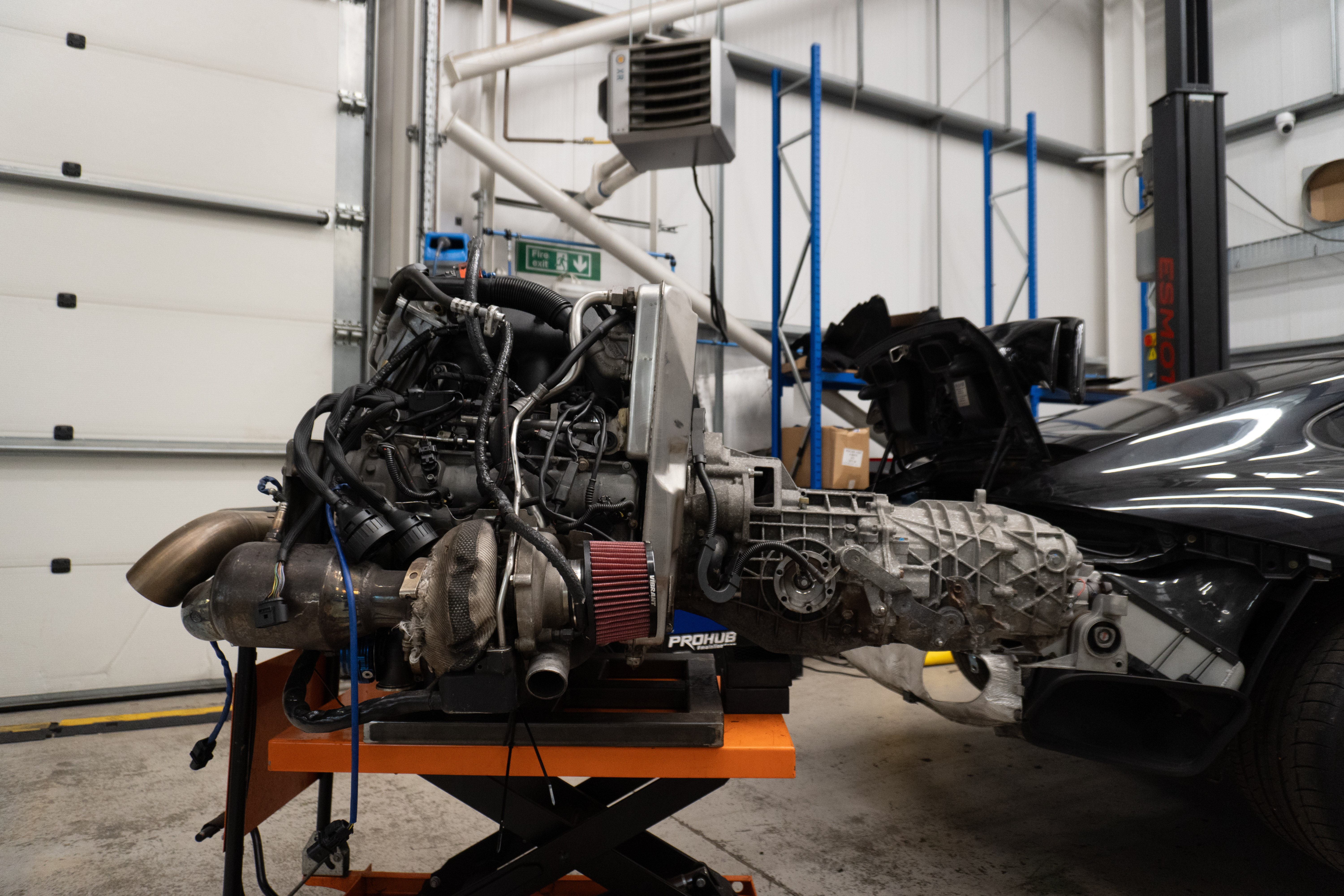
The thermostat controls when coolant flows to the radiator. On a stock car, the factory thermostat opens at a temperature that suits normal road use and keeps the engine in its optimal operating window for efficiency and emissions. On a high-power build running harder and generating more heat, a lower opening temperature thermostat allows coolant to reach the radiator sooner and keeps overall operating temperature lower.
A lower temperature thermostat is a relatively inexpensive upgrade that makes a meaningful difference on a modified car. However, it needs pairing with an appropriate ECU tune that reflects the new target operating temperature. Running a lower thermostat without updating the tune can cause the ECU to misinterpret the lower temperature as a cold start condition and run a richer fuel map than necessary.
Coolant routing also deserves attention on heavily modified builds. Factory coolant hoses route through a path designed for a stock engine layout. When additional components go into the engine bay, the routing sometimes needs revision to ensure consistent flow without air pockets or restrictions. Air pockets in the cooling system cause localised hot spots and inconsistent temperature readings that affect ECU management.
Coolant Type and System Maintenance
The coolant itself matters on a high-power build. Factory coolant works well within the temperature range of a stock engine. On a modified engine running higher temperatures, the coolant needs to maintain its corrosion inhibition properties and boiling point across a wider operating range. Using the correct coolant type for the specific engine and cooling system materials prevents corrosion and maintains heat transfer efficiency over time.
Some high-power track builds run a water and wetting agent mixture rather than conventional antifreeze coolant. Water transfers heat more efficiently than antifreeze, and a wetting agent reduces surface tension to improve contact between the coolant and the metal surfaces it cools. This approach works well on dedicated track cars but needs careful management because it offers no freeze protection and requires more frequent changes to maintain corrosion inhibition.
Regular coolant system maintenance matters more on a modified car than on a stock one. Coolant that degrades loses its corrosion inhibiting properties and can become acidic, which damages aluminium components in the cooling system over time. At ES Motors, we include cooling system condition checks as part of every service on modified cars and recommend coolant changes at intervals appropriate for the power level and use of each car.
Water Cooling Upgrades at ES Motors
Porsche water cooling upgrades need matching to the specific heat output of the build and the conditions the car operates in. A street car that sees occasional hard drives needs a different cooling specification to a dedicated track car running multiple sessions. Getting the specification wrong in either direction creates problems, whether that’s insufficient cooling capacity or an overcooled engine that never reaches its optimal operating temperature.
At ES Motors, every high-power build gets a full cooling system assessment as part of the build planning process. We look at radiator capacity, water pump flow, thermostat specification, coolant routing, and coolant type together as a complete system. The result is a cooling system that keeps the engine in its correct operating window no matter how hard the car gets driven.
If you’re planning a high-power Porsche build and want to make sure the water cooling system matches your power target and driving conditions, contact ES Motors and speak with our build specialists today.