Cart 0


Upgrading Porsche Turbochargers: VTG vs. Ball Bearing Turbos Explained
Upgrading Porsche VTG vs Ball Bearing Turbo – Choosing the right turbocharger upgrade is one of the most critical decisions when building a high-performance turbo Porsche. It defines the character of the car: how it builds boost, where the power sits in the RPM range, and the ultimate horsepower potential of the build.
Modern Porsche 911 Turbos come equipped from the factory with Variable Turbine Geometry (VTG) turbochargers. While VTG technology is excellent for factory drivability, serious power goals often require a choice between upgrading the VTGs or converting to conventional ball bearing turbochargers.
At ES Motors, we build everything from responsive street cars to 1000+ HP monsters. Understanding the differences between upgrading porsche VTG vs ball bearing turbo is key to planning a build that meets your driving goals.
Understanding VTG (Variable Turbine Geometry)
VTG turbochargers use adjustable vanes inside the turbine housing to constantly vary the airflow path. At low RPM, the vanes close to restrict exhaust flow, speeding it up to spool the turbo quickly. At high RPM, the vanes open to prevent exhaust restriction.
This technology provides the best of both worlds: the quick response of a small turbo at low speeds, and the flow capability of a larger turbo at high speeds. This is why a stock 911 Turbo S has almost zero lag and makes effortless torque from low down.
For street-driven builds targeting up to 850–900 HP, upgraded VTG turbos (featuring larger compressor wheels and modified housings) offer incredible performance while retaining that instant factory throttle response.
The Limits of VTG Turbos on High-Power Builds
Despite their responsiveness, VTG turbos have clear physical limitations. The complex internal mechanism of adjustable vanes restricts the ultimate volume of exhaust gas that can flow through the turbine housing.
As you push boost levels higher, the exhaust backpressure in a VTG system rises rapidly. High backpressure increases cylinder temperatures and stresses the engine, ultimately limiting how much peak power can be safely produced.
Furthermore, VTG turbos are sensitive to extreme heat. Under sustained high-load conditions (such as track use or half-mile racing), the heat can cause the moving vanes to bind or wear out over time.
Ball Bearing Turbochargers: Built for Peak Power
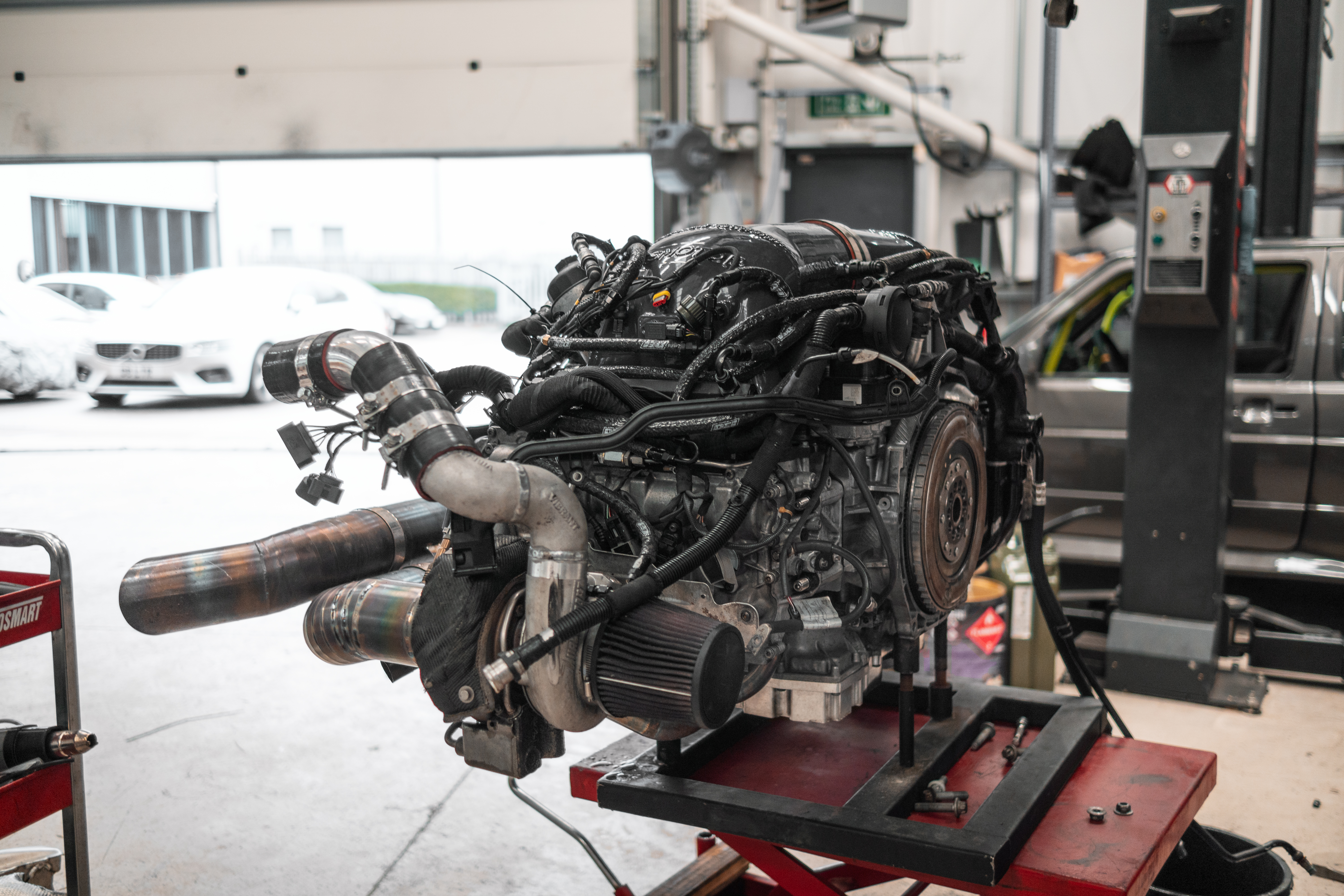
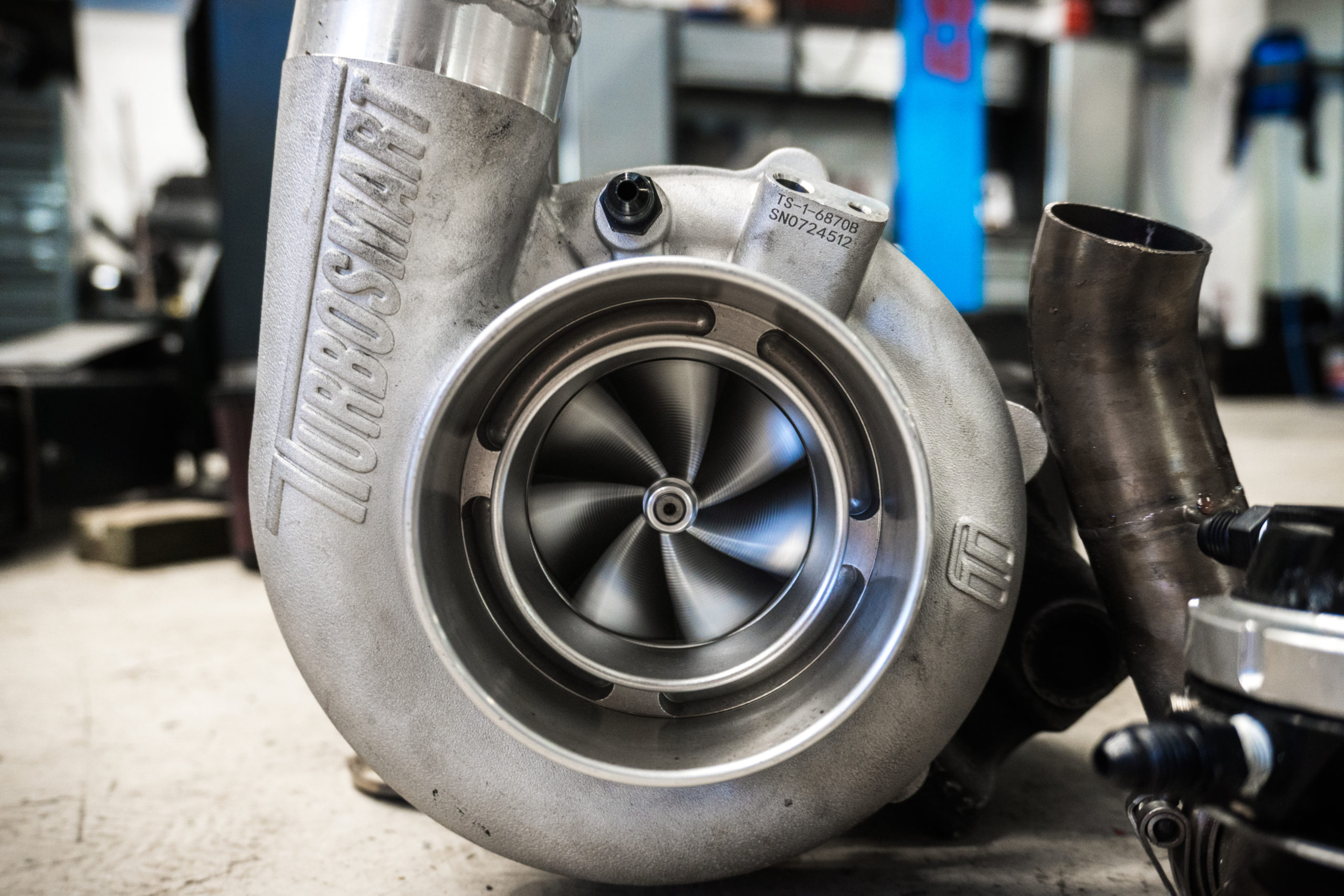
When target power levels exceed 950–1000+ HP, converting to aftermarket dual ball bearing turbochargers becomes the preferred path. These turbos use a fixed turbine housing design, which eliminates the restriction of VTG vanes.
The ball bearing cartridge supports the turbo shaft with minimal friction, allowing for high rotational speeds and excellent durability. Because the housing is open and aerodynamically optimized, it allows exhaust gases to flow freely with significantly lower backpressure.
This allows the engine to breathe much better at high RPM, letting tuner specialists extract massive horsepower figures safely and consistently without overloading the engine with heat.
The Trade-Off: Spool Time vs. Top-End Flow
The choice between Porsche VTG vs Ball Bearing Turbo setups always comes down to a trade-off. VTG turbos will always spool faster and deliver torque earlier in the RPM range, making the car feel extremely punchy on the street.
A ball bearing turbo conversion (such as a Garrett or Xona Rotor setup) will introduce slightly more lag compared to VTGs. However, once boost kicks in, the acceleration is incredibly violent, and the car will continue pulling hard all the way to redline.
Thanks to modern ECU tuning capabilities, the lag on modern ball bearing conversions is highly minimized. Electronic wastegates and precise throttle calibrations help keep the turbos spinning and ready to deliver power.
Which Setup Is Right for Your Porsche?
If your goal is a highly responsive, daily-drivable street car that makes 700 to 850 HP, an upgraded VTG package (like our ES800 or ES850) is the perfect fit. You keep the instant torque and effortless low-end behavior.
If you are aiming for a 1000+ HP build designed for roll racing, drag racing, or extreme highway performance, a ball bearing turbo conversion (like our ES900 or ES1000 packages) is the right choice.
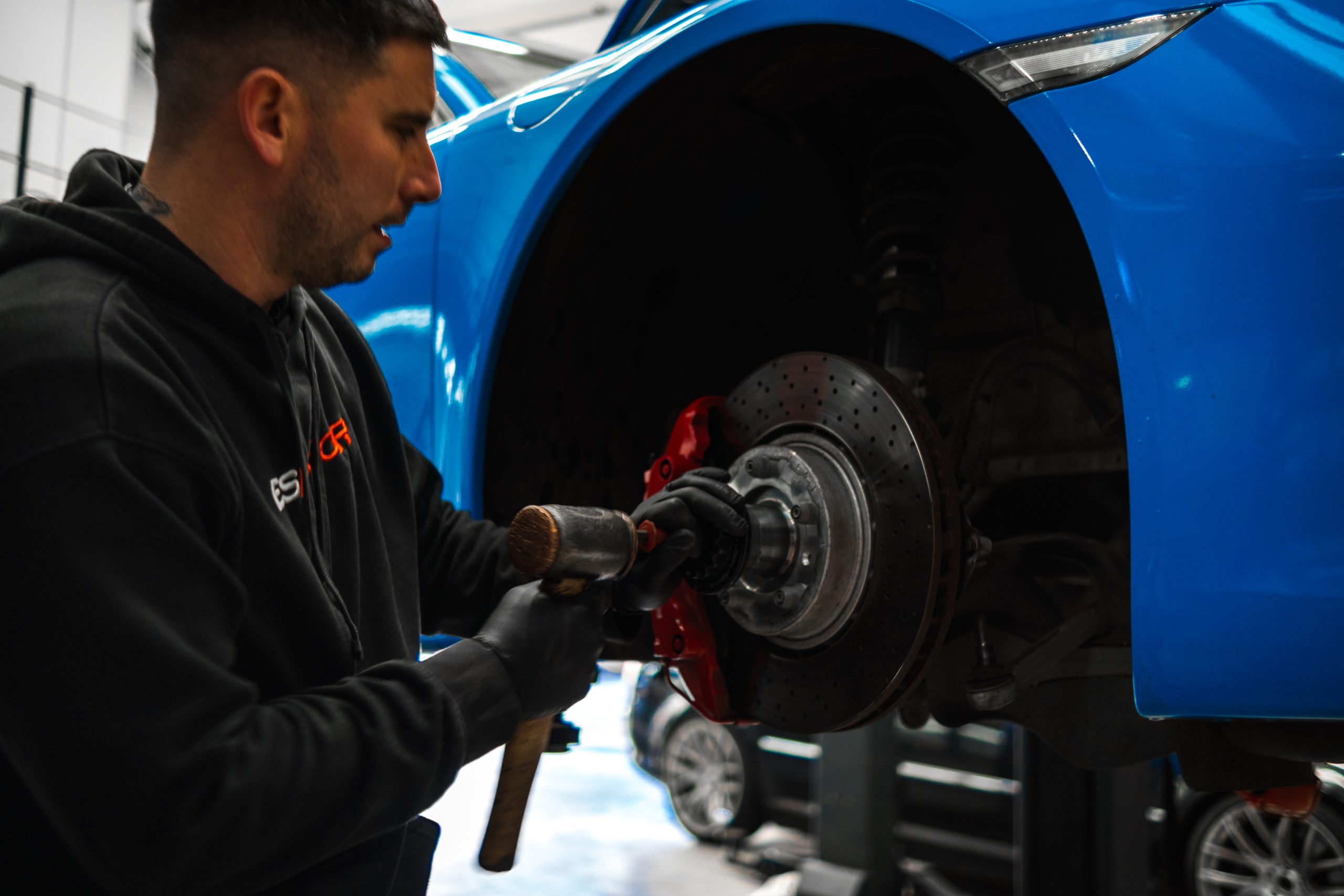
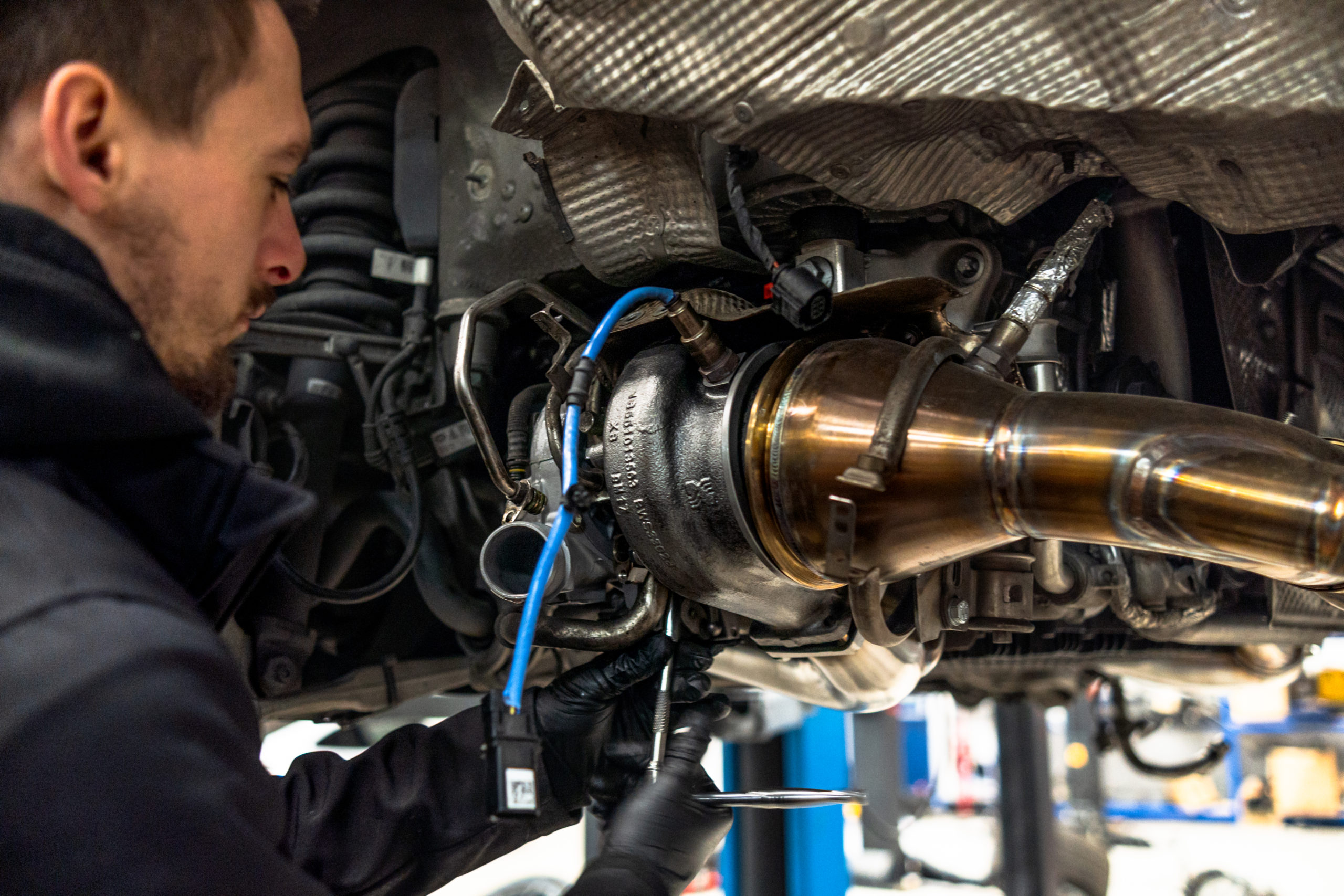
Converting to ball bearing turbos also requires changing the oil and coolant lines, wastegate actuators, and exhaust connections, making it a more complex installation but one that pays off in ultimate performance.
Partnering with ES Motors for Your Build
Every driver has different expectations for their Porsche. Selecting a turbocharger setup isn’t just about pick-and-play parts; it’s about matching the turbo flow maps to your specific engine, fuel setup, and gearbox tuning.
At ES Motors, we configure complete, integrated packages to ensure your engine, turbos, and software work together seamlessly, maintaining reliability while delivering maximum power.
Related at ESMotor: see our Porsche 992 Turbo S tuning packages.
If you are planning a turbo upgrade and want to discuss whether VTG or a ball bearing conversion is best for your goals, contact ES Motors and speak to our tuning specialists today.