Cart 0


Weight Reduction for High-Power Turbo Porsches: Lightweight Builds & Power-to-Weight Ratio
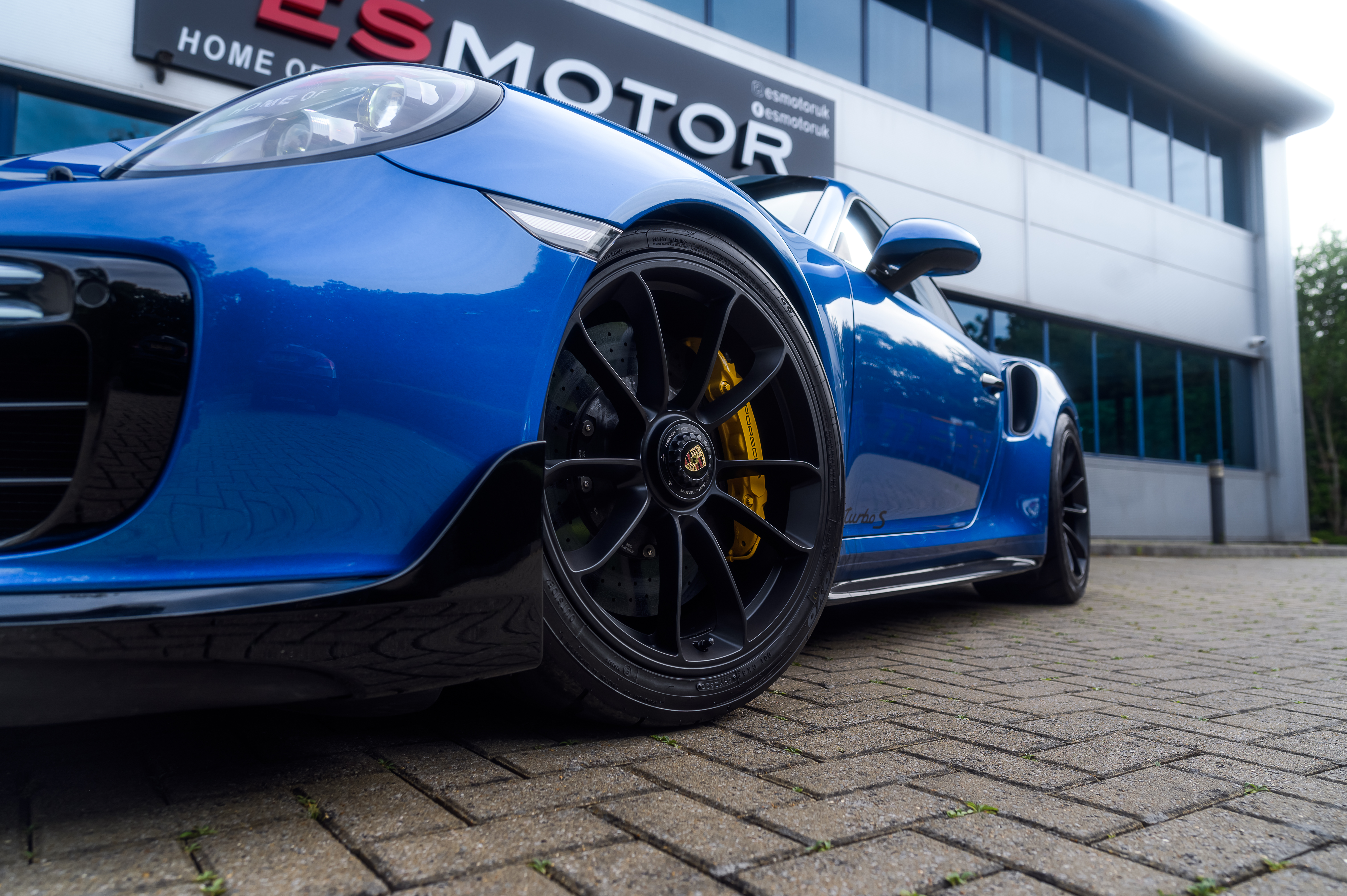
Porsche weight reduction is one of the most effective performance upgrades you can make. It is also one of the most underrated. Adding power gets most of the attention in a build. However, reducing weight improves every single aspect of how a car performs. Acceleration, braking, cornering, and tyre wear all get better when the car weighs less.
The factory Porsche 911 Turbo is not a light car. It carries a lot of comfort, safety, and convenience equipment. For a road car, that weight is justified. For a build targeting maximum performance on track or in competition, every kilogram removed directly improves the power-to-weight ratio without touching the engine.
At ES Motors, we approach weight reduction as part of a complete build strategy. Removing weight intelligently, without compromising structural integrity or safety, requires as much planning as any mechanical upgrade.
Why Power-to-Weight Ratio Matters
Power-to-weight ratio is the figure that really determines how fast a car feels. Two cars with the same horsepower but different weights perform very differently. The lighter car accelerates harder, brakes shorter, and changes direction more quickly.
Reducing weight also reduces the load on every mechanical component. Brakes, tyres, suspension, and drivetrain all work less hard on a lighter car. As a result, components last longer and perform more consistently, particularly on track where thermal load is a constant concern.
Porsche weight reduction also improves handling balance. The factory 911 carries weight in specific places for packaging and safety reasons. Removing weight selectively from the right areas improves natural balance and reduces the polar moment of inertia. This makes the car respond more quickly and accurately to steering input.
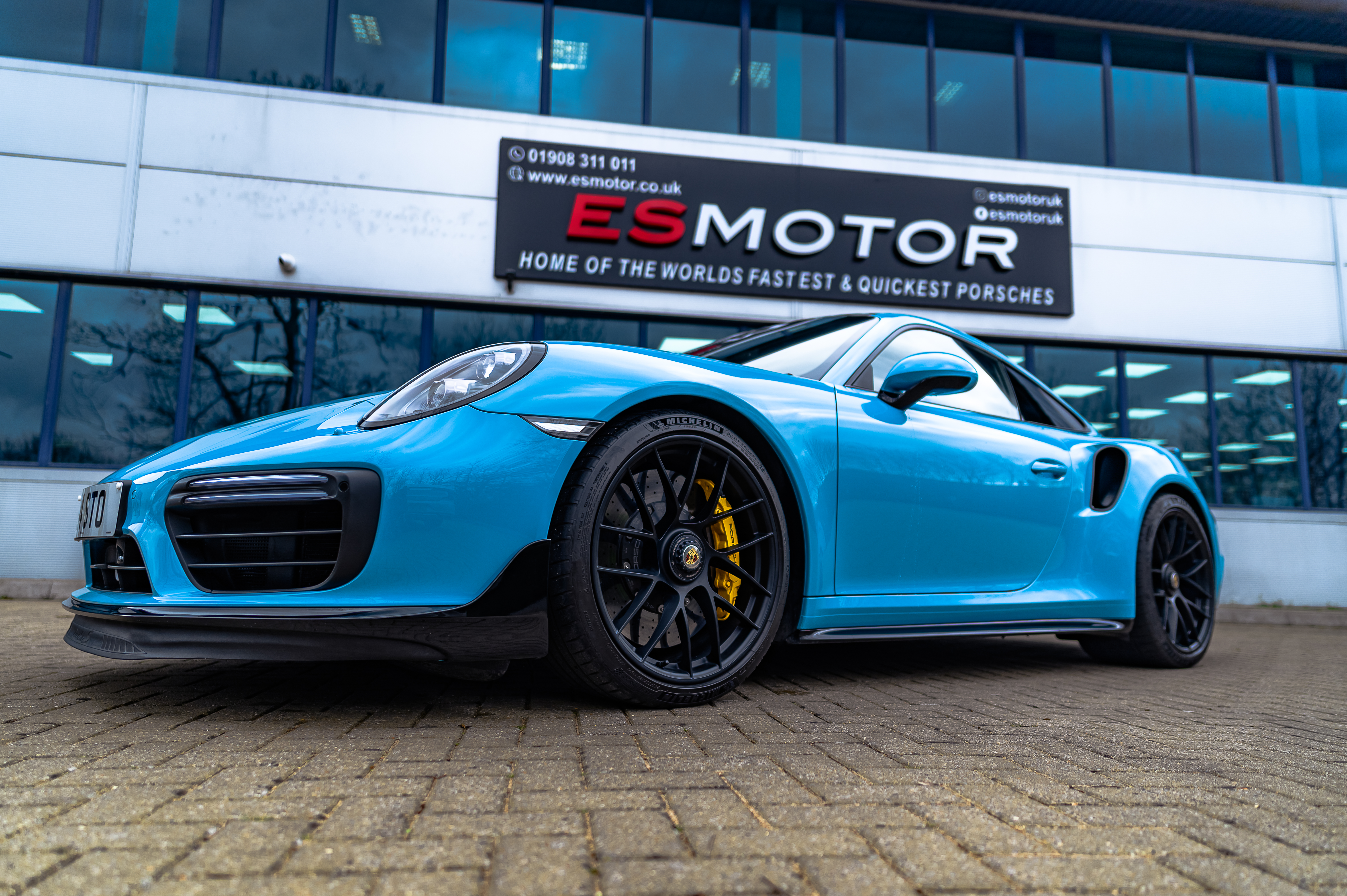
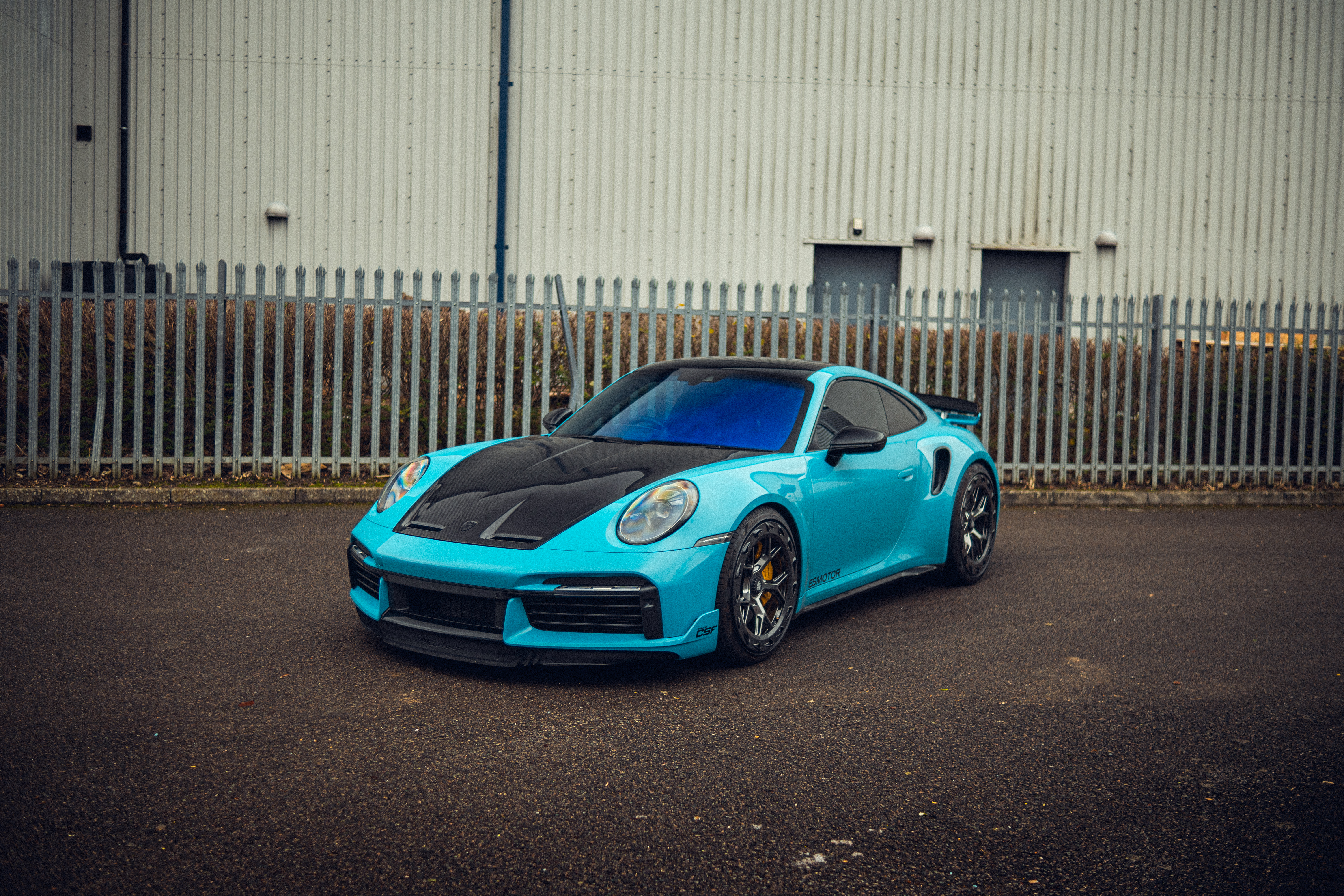
Interior Strip Out: The Biggest Single Saving
The interior of a factory Porsche 911 Turbo carries a significant amount of weight. Rear seats, carpets, sound deadening, door cards, and the full infotainment system all add up quickly. For a dedicated track or competition build, removing all of this is the fastest way to achieve a large weight saving.
A full interior strip out on a 911 Turbo can remove between 80 and 120 kg. That saving improves the power-to-weight ratio as effectively as a major engine upgrade. Moreover, it costs considerably less and improves the car in ways that extra power simply cannot.
For builds that need some road usability, a partial strip out removes the heaviest items while keeping the car driveable. Lightweight seats, a minimal sound system, and stripped door cards achieve a useful saving. At ES Motors, we plan the interior strip out around the intended use of the build.
Carbon Fibre Body Panels and Exterior Components
Carbon fibre body panels are one of the most visible and effective ways to reduce weight on a high-performance Porsche. Bonnet, boot lid, roof panel, doors, and bumpers are all available in carbon fibre for various 911 platforms. The savings across multiple panels add up quickly.
Beyond the weight saving, carbon fibre panels offer a stiffer structure than steel equivalents. This contributes to overall rigidity, which benefits handling precision. However, carbon panels need careful fitting to ensure gaps and alignment meet an acceptable standard.
Carbon fibre interior components add further savings inside the car. Dashboard panels, door skins, centre console trim, and seat shells all contribute. Combined with a full or partial interior strip out, a comprehensive carbon fibre programme removes a substantial amount of weight from the centre of the car.
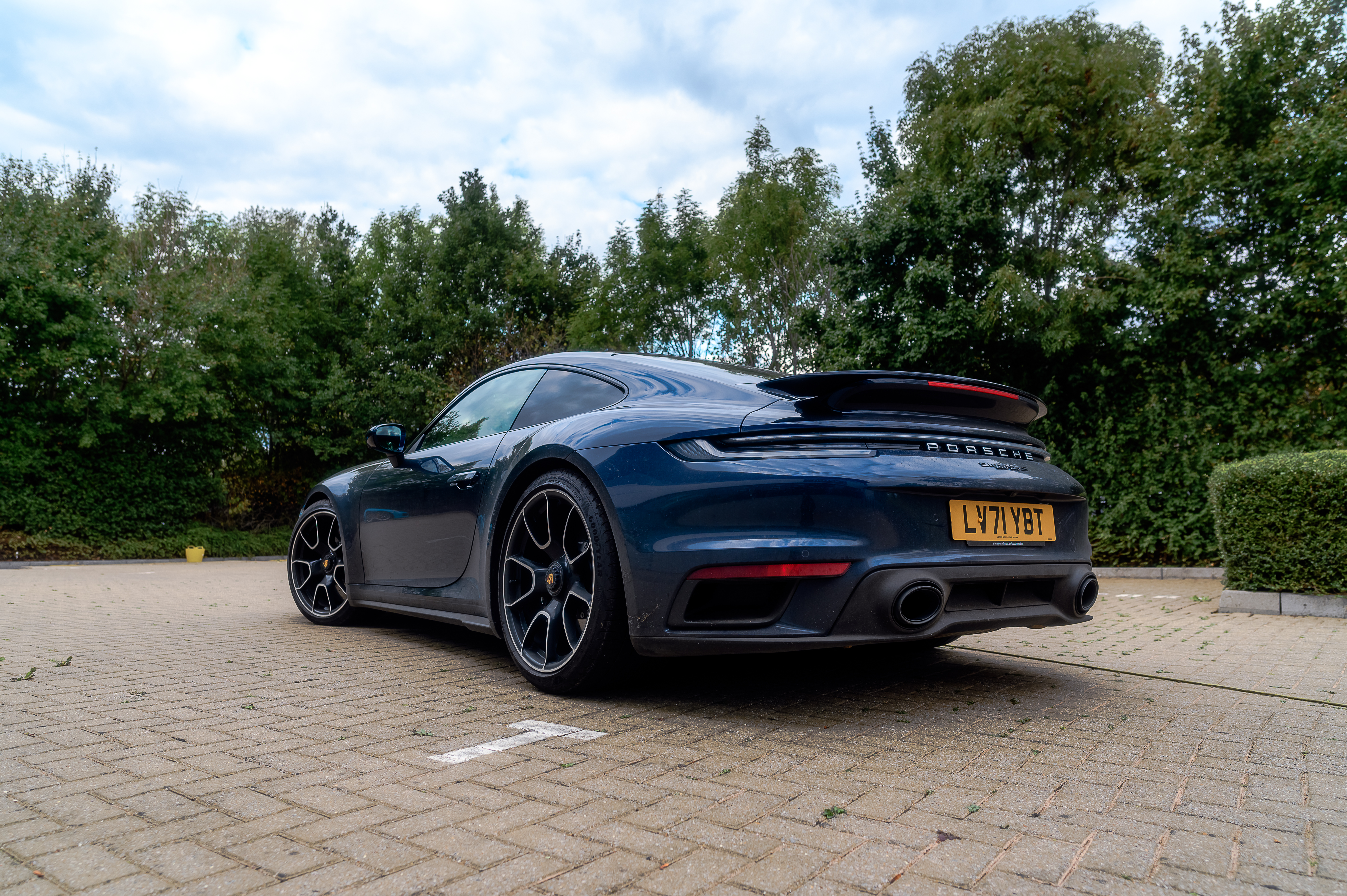
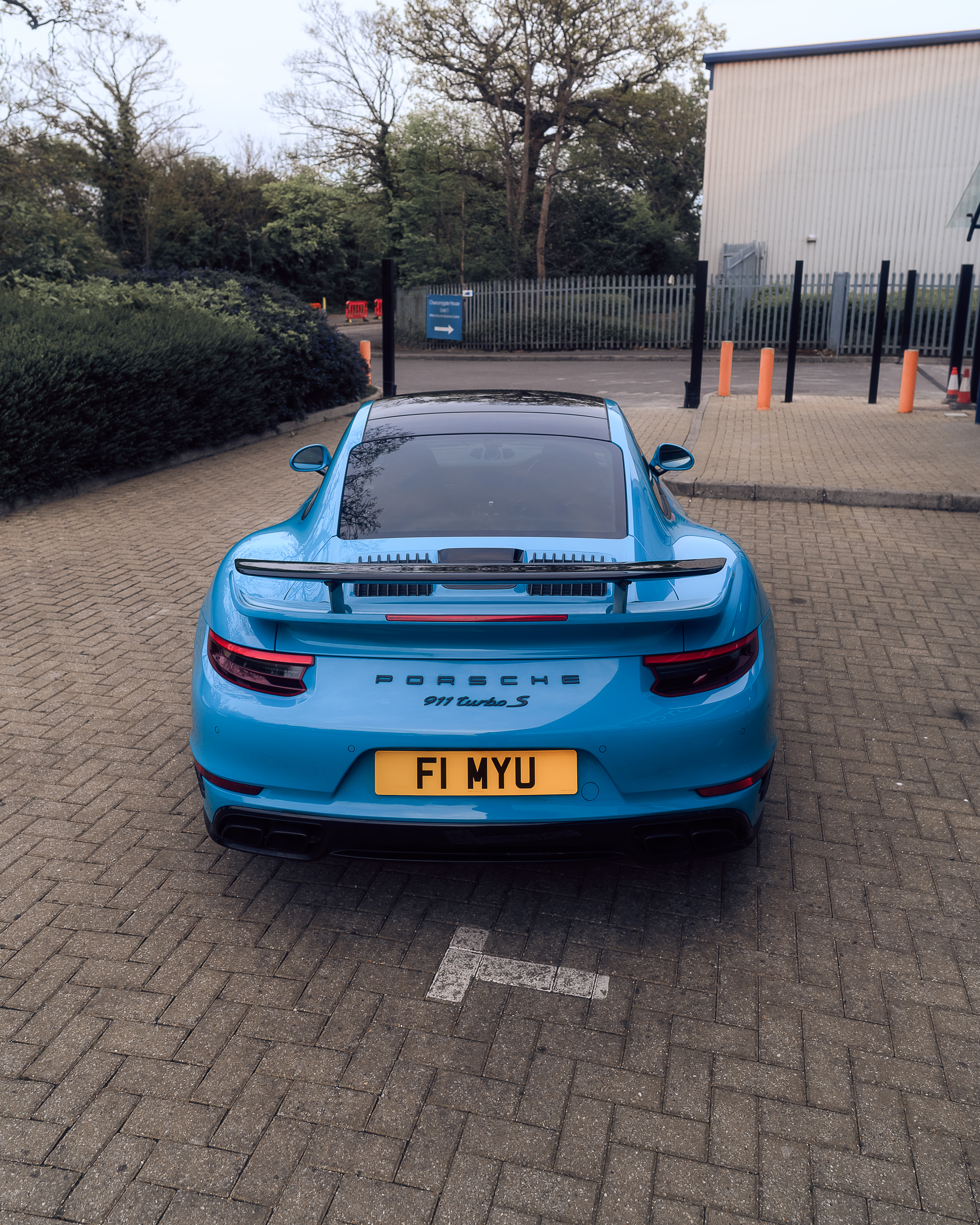
Lightweight Wheels: Reducing Unsprung and Rotational Mass
Wheel weight is more valuable to reduce than equivalent weight elsewhere on the car. Wheels are unsprung mass, meaning the suspension controls their movement directly. Lighter wheels respond faster to road surface changes and reduce rotational inertia. This means the engine has less work to do accelerating and decelerating the wheel assembly.
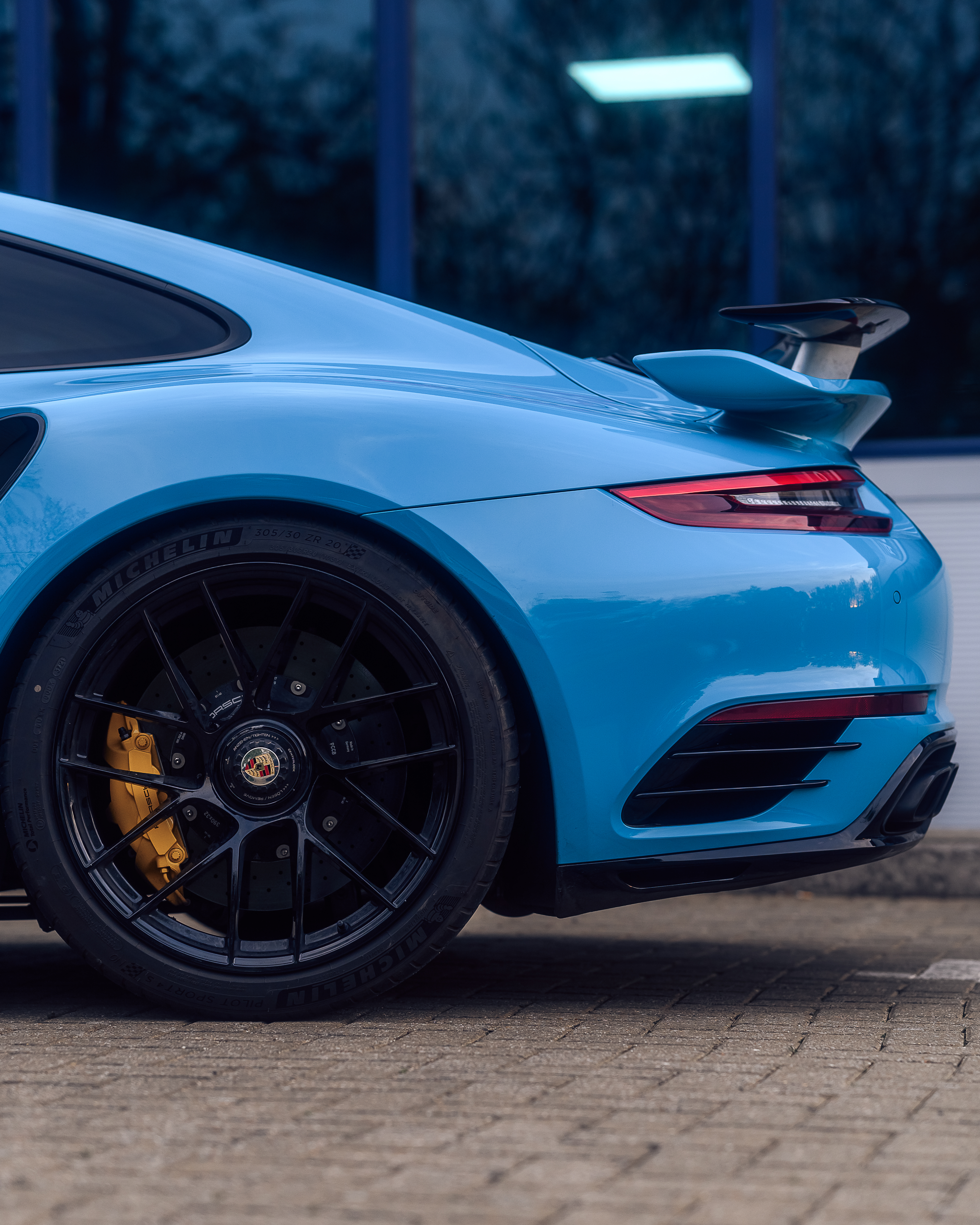
A set of lightweight forged wheels on a 911 Turbo can save between 8 and 15 kg compared to the factory items. That saving feels larger than an equivalent saving elsewhere on the car. Additionally, lighter wheels reduce the load on wheel bearings and suspension components, which improves longevity under hard use.
At ES Motors, we specify wheel weight and width based on the tyre size the build requires and the power level the car runs. A wheel that is too light for the torque loads of a 1000 HP launch can fail. Getting the specification right means maximum weight saving with appropriate strength for the application.
Lightweight Glass, Polycarbonate, and Glazing
Factory glass is heavy. Replacing side windows and rear screens with polycarbonate panels removes weight from high up in the car. This improves the centre of gravity as well as reducing total mass. Polycarbonate is significantly lighter than glass and offers good optical clarity for track use.
However, polycarbonate has limitations for road use. It scratches more easily than glass and may not meet road legal requirements in some regions. For a dedicated track car this isn’t a concern. For a car that sees road use, lightweight laminated glass offers a useful middle ground while remaining road legal.
Saving weight high up in the car lowers the centre of gravity. This directly improves cornering stability and reduces body roll. Both lap times and driver confidence benefit as a result.
Planning Weight Reduction with ES Motors
Porsche weight reduction done properly is a planned process, not a list of random deletions. Removing the wrong things in the wrong order can compromise structural integrity or affect safety systems. A build that strips weight without a clear plan often creates problems that are expensive to fix.
At ES Motors, we plan weight reduction alongside the rest of the build from the start. We identify the heaviest items, assess which removals suit the intended use of the car, and carry out the work in the right sequence. This maintains structural and safety integrity throughout the process.
Related at ESMotor: see our Porsche styling and aero and ESMotor Porsche tuning packages.
The result is a car that is meaningfully lighter, properly balanced, and ready to use the power the engine produces more effectively. If you’re planning a high-power Porsche build and want to understand how weight reduction can improve performance, contact ES Motors and speak with our build specialists today.